Every year, lakhs of NEET-qualified students in India compete for a limited number of MBBS seats. With government colleges accepting only a small fraction of applicants and private medical colleges charging fees that put a strain on most middle-class families, many students are now looking beyond India to complete their medical education. Kyrgyzstan has emerged as one of the more accessible destinations for this, and Osh State Medical University is one of the names that comes up frequently in these conversations.
If you're a NEET-qualified student weighing your options for MBBS abroad, this article walks you through what Osh State Medical University actually offers — from eligibility and admission steps to fees, hostel life, and how recognition works for Indian students who want to practice medicine back home.
A Quick Introduction to Osh State University

Osh State University is a public university located in Osh, the second-largest city in Kyrgyzstan and often referred to as the country's "southern capital." The university has been offering medical education for several decades and has built a reputation among international students, including a steady number from India, Pakistan, Nepal, and other neighbouring regions, for its MBBS programme.
Osh itself is a smaller, more relaxed city compared to Kyrgyzstan's capital Bishkek. For students coming from busy Indian cities, this often means a quieter environment with a lower cost of living — which matters a lot when you're budgeting for six years of study and stay abroad.
Because Osh State University runs a full MBBS programme taught in English for international students, it's regularly considered alongside other Kyrgyz universities by students and consultancies working in the MBBS-abroad space.
Why Are Indian Students Considering MBBS in Kyrgyzstan?
Before looking specifically at Osh State University, it helps to understand why Kyrgyzstan as a country has become a popular MBBS destination for Indian students:
- Limited MBBS seats in India: The number of NEET-qualifying candidates each year far exceeds the number of available MBBS seats, especially government seats.
- High private college fees in India: Private medical colleges in India often charge fees that can run into crores over the course of the degree, which is out of reach for many families.
- English-medium instruction: Several Kyrgyz universities, including Osh State University, offer MBBS programmes taught in English, which removes the language barrier for Indian students.
- No separate entrance exam: Admission is typically based on your Class 12 academic record and NEET qualification, rather than requiring you to sit another entrance test.
- Degree recognition pathway: Kyrgyz medical universities that are recognised under India's regulatory framework allow graduates to appear for the licensing exam required to practice in India.
This combination — affordability, English-medium teaching, and a defined path back to Indian practice — is what draws attention to universities like Osh State University in the first place.
Eligibility Criteria for Osh State University MBBS
Admission requirements for Indian students at Osh State University generally follow the eligibility framework set by India's National Medical Commission (NMC) for MBBS abroad. While you should always confirm the latest requirements directly with the university or a registered consultancy before applying, the eligibility criteria typically include:
- Completion of Class 12 with Physics, Chemistry, and Biology (PCB) as core subjects from a recognised board.
- A minimum aggregate of around 50% in PCB for general category students, with a relaxed percentage for SC/ST/OBC and other reserved categories, in line with NMC norms.
- A valid NEET-UG qualifying score. Indian students are required to have cleared NEET-UG to be eligible for MBBS abroad, and this qualification is usually considered valid for a limited number of years.
- A minimum age requirement, generally 17 years, to be completed by December 31 of the admission year.
No additional entrance exam or English-language proficiency test like IELTS or TOEFL is typically required for Indian applicants, since the eligibility is primarily based on your NEET and Class 12 scores.
Documents Usually Required for Admission
While the exact checklist can vary slightly by intake, students are generally asked to prepare:
- Class 10 and Class 12 mark sheets and certificates
- NEET-UG scorecard
- Valid passport
- Birth certificate
- Passport-sized photographs
- Medical fitness certificate (in some cases)
It's worth starting to organise these documents early, since delays in paperwork are one of the most common reasons students miss an intake.
Osh State University Admission Process
Unlike admissions in India, where you're waiting on counselling rounds and seat allotments, the process for Osh State University MBBS admission is fairly direct. Here's how it generally works:
- Document submission: You submit scanned copies of your academic documents, NEET scorecard, and passport for eligibility verification.
- Eligibility check and provisional offer: Once your documents are reviewed, the university issues a provisional admission or invitation letter if you meet the criteria.
- Fee payment: You pay the required admission or tuition fee as per the university's payment structure to confirm your seat.
- Visa and travel documentation: With the invitation letter in hand, you apply for your student visa and prepare travel arrangements.
- Departure and enrolment: You travel to Osh, complete in-person document verification, and begin your academic year.
Because this process is largely document-based, many students choose to work with a study-abroad consultancy to avoid errors in paperwork, missed deadlines, or miscommunication with the international admissions office. This is also where guidance from an experienced team, such as North Western Education Services, tends to be useful — not just for the initial admission, but for visa support, pre-departure preparation, and staying in touch with the university once you're enrolled.
Osh State University MBBS Fees: What to Expect
For most Indian families, the total cost is an important part of the university-selection process. But it is useful to distinguish between official university tuition and the overall budget required for studying abroad.
Osh State University publishes its official tuition information for foreign students through its university website. Students should check the latest fee schedule for the academic year in which they plan to enrol.
For planning purposes, North Western Education Services provides the following estimated cost structure for students considering Osh State University:
| Component Estimated | Cost |
|---|---|
| Annual Tuition Fee | USD 3,500–4,500 per year |
| Hostel/Accommodation | USD 800–1,000 per year |
| Living Expenses | USD 100–150 per month |
| Estimated 6-Year Overall Cost | Approximately ₹25–35 lakh |
These figures are an estimated planning range provided by North Western Education Services, not a statement that the university guarantees this total cost.
The final amount can change because of currency fluctuations, annual tuition revisions, accommodation choices, food expenses, travel, insurance and personal spending.
Students should ask for a complete cost breakdown before making any payment. This is especially useful when comparing Osh State University with other medical universities in Kyrgyzstan.
Recognition and Approval: Can You Practice in India After This?
This is usually the single biggest concern for parents and students, and rightly so. A medical degree is only as valuable as the doors it opens for practice afterwards.
Osh State University is commonly listed as being recognised by bodies relevant to international medical education, including inclusion in the World Directory of Medical Schools (WDOMS), which is jointly maintained by the World Federation for Medical Education and the Foundation for Advancement of International Medical Education and Research (FAIMER). For Indian students, what matters most is that the university appears on the list of foreign medical institutions recognised by India's National Medical Commission (NMC).
If a university is on this recognised list, students who complete their MBBS there are generally eligible to appear for the Foreign Medical Graduate Examination (FMGE), now integrated into the NEXT (National Exit Test) framework, which is the licensing exam required to practice medicine in India after graduating from a foreign university.
Because recognition status and regulatory requirements can be updated by the NMC from time to time, it's essential to verify Osh State University's current status directly on the official NMC website, or through your consultancy, before finalising your admission — rather than assuming a status you may have read about is still current.
Hostel Life and Student Facilities
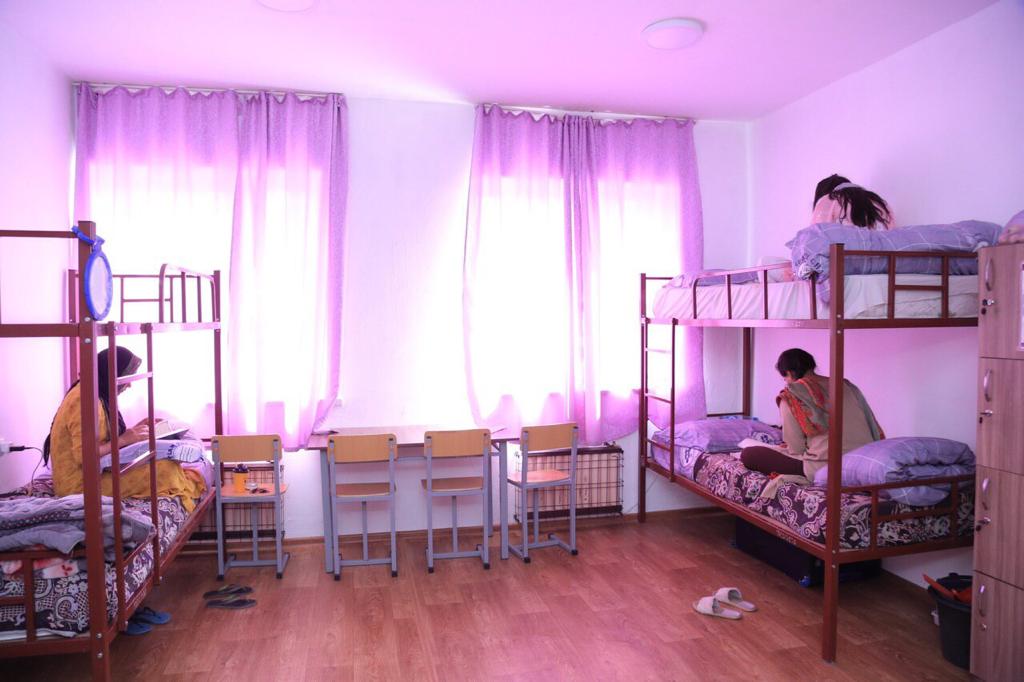 For most Indian students, this will be their first extended stay away from home, so daily living conditions matter as much as academics. Osh State University, like most Kyrgyz universities catering to international students, provides on-campus or university-affiliated hostel accommodation for its MBBS students.
Generally, students can expect:
- Shared hostel rooms with basic furnishings (bed, study table, storage)
- Common washroom and kitchen facilities on most floors
- Access to mess or cafeteria facilities, with many hostels catering to Indian students by offering Indian-style meals or allowing students to cook their own food
- A reasonably safe, walkable distance between hostels and the main academic campus
Osh is generally considered a safe city for international students, though the usual precautions that apply to any unfamiliar city — being mindful in crowded markets, keeping valuables secure, and staying aware of your surroundings — still apply.
Since hostel facilities, room-sharing arrangements, and meal options can change or vary by intake, it's a good idea to ask for current photos, floor plans, or even to speak with seniors already studying there before you finalise your decision.
Life as a Student in Osh, Kyrgyzstan
Beyond the classroom, adjusting to a new country is a real part of the MBBS-abroad experience. Osh has a sizeable community of international students, including a consistent number of Indians, which tends to make the transition smoother — you're not the only one adapting to a new city, language, and food.
Classes are conducted in English for international students, though picking up basic Russian or Kyrgyz phrases can help with day-to-day interactions outside the classroom, such as at local markets or with hostel staff. Winters in Osh can be considerably colder than most parts of India, so students typically need to plan their wardrobe and daily routine around the seasonal climate.
Cultural adjustment aside, the structure of the MBBS course — including clinical postings and hospital exposure in later years — follows a format similar to what most Indian students would expect from a standard medical degree, just delivered within a different regulatory and academic system.
What Happens After Graduation?
Once you complete your MBBS at a recognised foreign university like Osh State University, the general pathway for Indian students to practice in India looks like this:
- Complete the MBBS programme, including any mandatory internship period as required by the university and Kyrgyz regulations.
- Verify that your degree and the university's recognition status are in good standing with the NMC at the time of your graduation.
- Register for and clear the NEXT/FMGE licensing examination, which is required before you can practice medicine in India.
- Complete any additional internship or registration steps mandated by Indian medical authorities.
Some graduates also choose to explore postgraduate opportunities either in Kyrgyzstan or through further examinations in India, depending on their career goals. Career outcomes ultimately depend on individual performance in the licensing exam and ongoing regulatory requirements, so it's worth treating this as a long-term commitment rather than a shortcut.
Is Osh State University the Right Choice for You?
There's no single best university for MBBS abroad — the right choice depends on your budget, comfort with living in a smaller city, and how much support you'll have through the admission and settling-in process. Osh State University tends to appeal to students who are looking for:
- A more affordable alternative to private MBBS seats in India
- An English-medium MBBS programme without additional entrance exams
- A smaller, quieter city environment compared to bigger international hubs
- A defined regulatory pathway back to practising in India, provided recognition status is verified
If these priorities match your own, it's worth having a detailed conversation with a consultancy that can walk you through current fee structures, hostel options, and the most recent recognition status before you commit. Teams like North Western Education Services, which work specifically with MBBS-abroad admissions, can help you compare Osh State University against other Kyrgyz and international options so you're making the decision with complete, current information rather than outdated blog figures.
Frequently Asked Questions
1. Is NEET qualification mandatory for admission to Osh State University?
Yes. As per NMC guidelines, Indian students must have a valid NEET-UG qualifying score to be eligible for MBBS admission at Osh State University or any other foreign medical university.
2. Do I need to give any other entrance exam for Osh State University MBBS?
Generally, no separate entrance exam is required beyond NEET-UG. Admission is typically based on your Class 12 academic record and NEET score.
3. Is IELTS or TOEFL required for admission?
Most Indian applicants are not required to submit IELTS or TOEFL scores, since MBBS programmes for international students are taught in English and eligibility is based on academic and NEET qualifications instead.
4. Will my MBBS degree from Osh State University be valid in India?
If Osh State University holds current recognition status with India's National Medical Commission and appears on the relevant approved list, graduates can appear for the NEXT/FMGE licensing exam required to practice in India. This status should be verified directly with the NMC before admission, as recognition details can be updated.
5. What is the total duration of the MBBS programme at Osh State University?
MBBS programmes in Kyrgyzstan, including at Osh State University, typically follow a structure of around five to six years, which includes academic study and a clinical internship component, similar to other international medical degree formats.
6. How much does MBBS at Osh State University cost?
Fee figures vary across sources and change between academic sessions, so it's best to request the current, official fee structure directly from the university or a verified consultancy rather than relying on previously published figures.
7. What kind of accommodation is available for Indian students?
Osh State University generally provides hostel accommodation for international students, with shared rooms and access to mess or self-cooking facilities. Specific arrangements can vary by intake, so confirming current details before you apply is recommended.
Conclusion
Choosing where to study MBBS abroad isn't a decision to rush — it involves weighing eligibility, cost, recognition status, and day-to-day living conditions all at once. Osh State University offers a combination that appeals to many NEET-qualified Indian students: a straightforward, NEET-based admission process, English-medium instruction, and a more affordable route into a medical degree compared to private colleges in India.
That said, the details that matter most — current fees, hostel arrangements, and recognition status — are also the ones most likely to change year to year. Before making any commitment, verify this information directly with the university or through a consultancy experienced in Kyrgyzstan MBBS admissions, such as North Western Education Services, so your decision is based on accurate, up-to-date facts rather than assumptions.

Comments