If you've been researching MBBS options abroad, chances are Osh state university has already come up in your search. It's one of the more frequently mentioned names among Kyrgyzstan's medical universities, and for good reason — it draws a steady number of Indian students every admission cycle. But "popular" isn't the same as "right for you," so it's worth understanding exactly what makes this university a serious contender before you commit years of your life and a significant amount of money to it.
This article walks through the practical reasons Indian students consider Osh state university for MBBS — recognition status, cost structure, campus life, and the realistic path from admission to practising medicine in India. Wherever a detail depends on current government rules or university policy, we'll point you toward verifying it directly, because these things do change and no article should be your only source before making a final decision.
A Quick Introduction to Osh state university
Osh state university is a public university located in Osh, the second-largest city in Kyrgyzstan, in Central Asia. The university has a long academic history, and its medical faculty — sometimes referred to informally as Osh state medical university — is what attracts the bulk of international student interest, including from India.
For Indian families evaluating study-abroad medical programs, Osh sits in the same conversation as other Central Asian and Eastern European destinations that have become popular MBBS routes over the past decade or so. What typically draws students here is a mix of affordability, English-medium instruction, and a curriculum that follows an internationally recognisable medical education structure.
That said, "recognisable structure" doesn't mean identical to India's MBBS. The course length, subject sequencing, and clinical exposure will differ in some respects, and it's worth understanding these differences rather than assuming a one-to-one match.
Why NEET-Qualified Students Look at Osh state university
1. English-Medium Instruction for International Students
One of the more practical reasons Indian students consider Osh state university is that the medical program for international students is taught in English, rather than Russian or Kyrgyz. This removes a major barrier that exists at some universities where English-medium options are limited or introduced only in later years. For a student coming straight out of Class 12, not having to learn a new language before starting core subjects makes the transition considerably smoother.
2. Recognition Status Indian Students Should Verify
This is arguably the single most important factor for any NEET-qualified student evaluating a foreign medical university, and it deserves a careful, non-generic explanation.
Under current National Medical Commission (NMC) regulations, Indian students can only pursue MBBS abroad at universities listed in the World Directory of Medical Schools (WDOMS) — this listing is the baseline the NMC uses to determine which foreign medical qualifications are eligible for its licensing process. Multiple sources indicate Osh's medical faculty appears in this directory, and is also associated with WHO recognition. Because listings, approvals, and eligibility criteria can be updated by regulatory bodies, we'd strongly recommend confirming the university's current WDOMS status through the official WDOMS database and cross-checking NMC guidelines before applying, rather than relying solely on any single article — including this one.
It's also worth understanding what recognition does not guarantee. Even graduates of a WDOMS-listed university must clear India's licensing requirement — currently structured around the Foreign Medical Graduate Examination (FMGE) or the NExT (National Exit Test), depending on which is in effect at the time you graduate — before they're permitted to practise medicine in India. Recognition of the degree and eligibility to practise are two separate steps, and conflating them is one of the more common mistakes students make when comparing universities.
3. Relatively Affordable Cost of Education
Compared to private medical colleges in India — where MBBS seats without a management quota can run into crores of rupees — MBBS programs at Kyrgyz universities, including Osh, are generally positioned as a lower-cost alternative. Exact tuition fees, hostel charges, and any additional costs (registration, visa processing, insurance, study materials) vary by intake year and can change, so we won't quote specific figures here. What we'd suggest instead: request the current, itemised fee structure directly from the university or a verified admission partner, in writing, before making any payment, and be cautious of any fee quote that seems unusually low compared to other Kyrgyz universities — that's often a sign of hidden costs added later.
4. Established Track Record with Indian Students
Several Kyrgyz universities, including Osh, have hosted Indian students for a number of years now, which has resulted in an existing Indian student community on or near campus. For many first-time international travellers, having Indian peers around — people who understand the food preferences, festivals, and general homesickness that comes with studying far from home — makes a genuine difference to the day-to-day experience, separate from the academic side of things.
5. Clinical Exposure Through Teaching Hospitals
Medical universities in Kyrgyzstan typically structure their MBBS programs with a combination of theoretical coursework in the earlier years and clinical rotations in affiliated teaching hospitals in the later years, broadly similar in principle to how Indian MBBS programs are structured, though the specific hospitals, patient load, and rotation schedules will differ from what you'd experience in an Indian medical college. If clinical exposure is a priority for you, it's worth asking the university directly (or a study-abroad consultant with verified information) which hospitals are affiliated, what specialities are covered, and how much hands-on exposure students typically get during rotations.
Eligibility Criteria for MBBS Admission
While exact admission requirements should always be confirmed with the university or NMC guidelines for the relevant academic year, the general eligibility framework that applies to Indian students pursuing MBBS abroad typically includes:
- A qualifying score in NEET-UG, which has been mandatory for Indian students seeking to study medicine abroad since 2018
- A minimum aggregate in Physics, Chemistry, and Biology (PCB) in Class 12 — commonly cited around 50% for general category students, with some relaxation for reserved categories, though this should be verified against the current NMC notification for the admission year
- Meeting the minimum age requirement set by NMC guidelines at the time of application
- Holding a valid passport before the application process begins
Because these criteria are set and periodically revised by NMC, always cross-check the latest official notification rather than relying on last year's requirements.
What to Expect from Hostel and Campus Life
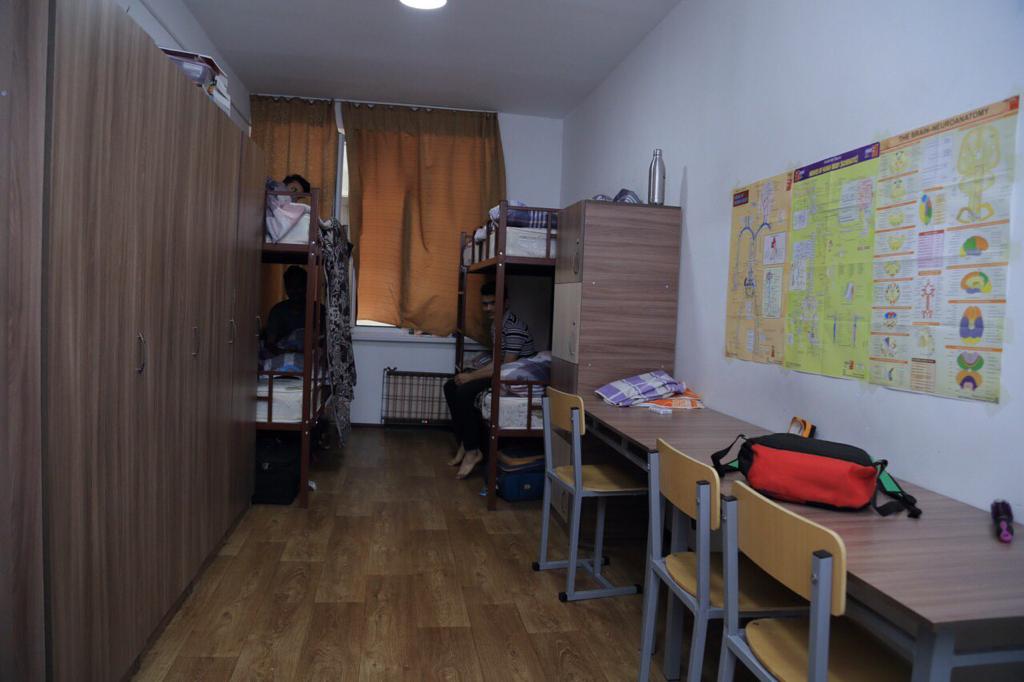 International students at Kyrgyz universities are typically offered on-campus or university-affiliated hostel accommodation, often with separate arrangements for international students that may include shared rooms, basic furnishing, and common facilities like kitchens or dining halls. Specific details — room-sharing arrangements, mess facilities, availability of Indian food options, laundry, and security — vary by university and can change from year to year, so ask for current photos, floor plans, and a written breakdown of what's included before you finalise admission. If possible, try to connect with current students (through verified sources, not just social media strangers) to get a realistic sense of daily hostel life rather than relying only on promotional material.
The Realistic Path After Graduation
For most Indian students, the practical roadmap after completing MBBS at a Kyrgyz university like Osh looks like this:
- Complete the full MBBS course duration as prescribed by the university (Kyrgyz medical programs are commonly structured around five to six years, inclusive of internship components — confirm the exact duration for Osh's current curriculum).
- Fulfil any internship requirements specified by both the university and, separately, by Indian regulations.
- Register with the NMC as required for foreign medical graduates.
- Appear for and clear India's licensing exam (FMGE or NExT, whichever applies at the time).
- Complete any additional internship period mandated in India before receiving a full licence to practise.
This is a multi-year process even after graduation, and it's important to plan for it financially and academically rather than assuming the Indian licence is a formality.
How to Approach the Decision
Choosing a foreign MBBS destination isn't just about comparing tuition fees side by side. It helps to weigh a few things together: the university's current recognition status, the total cost over the full course duration (not just year one), the realistic clinical training you'll receive, and how comfortable you'd be adjusting to life in that specific city. Students who do this comparison properly — rather than choosing based on a single glossy brochure — tend to have a smoother experience overall.
If you're weighing Osh state university against other Kyrgyz or Central Asian options, working with a study-abroad consultancy that provides verified, updated information — rather than recycled marketing copy — can save you from some of the more common and costly mistakes students make during the application process. North Western Education Services works with students exploring MBBS admissions at Osh state university and can help you verify current fee structures, eligibility documentation, and application timelines directly with the university before you commit.
FAQs
Is Osh state university a good option for MBBS for Indian students? It's one of the more established Kyrgyz universities with a notable Indian student presence and English-medium instruction. Whether it's the "right" option depends on your budget, comfort with living abroad, and confirming its current recognition status directly through official NMC and WDOMS sources.
Is an MBBS degree from Osh state university valid in India? Graduates of universities listed in the World Directory of Medical Schools can pursue India's licensing process, which currently involves clearing FMGE or NExT, depending on which applies at the time of graduation. Always verify Osh's current WDOMS listing status yourself before applying, since directory listings can change.
What is the minimum eligibility for MBBS admission at Osh state university? Generally, students need a qualifying NEET-UG score, a minimum PCB percentage in Class 12 as prescribed by NMC guidelines for that admission year, and to meet the minimum age requirement. Confirm the exact figures for your intake year with the university or a verified consultant.
How long is the MBBS program at Osh state university? Kyrgyz medical universities commonly structure their programs across five to six years, including internship components, but exact duration and curriculum structure should be confirmed directly with the university for the current academic year.
Do I need to know Russian or Kyrgyz to study MBBS at Osh state university? The international medical program is taught in English, so fluency in Russian or Kyrgyz isn't a prerequisite for coursework, though picking up basic conversational phrases can help with day-to-day life and clinical interactions later in the course.
How much does MBBS cost at Osh state university? Tuition and hostel costs vary by intake year and are subject to change, so we'd recommend requesting the current, itemised fee structure directly from the university or a verified admission partner rather than relying on figures quoted in older articles.
Conclusion
Osh state university checks several practical boxes that matter to NEET-qualified Indian students — English-medium instruction, a relatively lower cost of education, an established Indian student community, and a curriculum built around clinical exposure. But none of that replaces the need to personally verify the details that carry real consequences: current recognition status, exact fees, and the specific licensing steps you'll need to complete in India after graduation. Treat this article as a starting point for your research, not the final word — confirm the specifics with official sources or a trusted study-abroad consultant, and only then make your decision.

Comments